Crafting Time from the Kitchen: Haptic Temporality and Rhythmanalytic Resistance in The Lid of the Sea, The Zen Diary and The Taste of Things
Article by Nguyen Thi Ha An
Abstract:
In the contemporary digital era, the expansion of artificial intelligence and automation has further intensified processes of “social acceleration” (Hartmut Rosa), increasingly separating human experience from biological and sensory rhythms. Under conditions of algorithmic efficiency and continuous cognitive responsiveness, time is often reduced to abstract data flows and accelerated forms of processing. In this context, culinary labor and gastronomic practices emerge as significant sites for recovering embodied temporal experience. This paper examines the kitchen as a heterotopic space of temporal resistance through a comparative analysis of Banana Yoshimoto’s The Lid of the Sea (2006), Yuji Nakae’s Zen Diary (2022), and Tran Anh Hung’s The Taste of Things (2023). Drawing primarily on Henri Lefebvre’s theory of rhythmanalysis, the study argues that these works construct forms of “haptic duration” in which time is experienced through bodily labor, temperature, repetition, and sensory engagement. In The Lid of the Sea, the manual shaving of ice facilitates a gradual process of emotional recovery through tactile repetition. In Zen Diary, the preparation of seasonal food aligns bodily existence with cyclical and ecological rhythms. Meanwhile, The Taste of Things presents culinary labor as a collaborative and eurhythmic practice through which intimacy and continuity are sustained across time. By incorporating Laura U. Marks’ theory of haptic visuality and Byung-Chul Han’s concept of lingering (Verweilen), this article demonstrates how slowness functions as a form of rhythmanalytic resistance to accelerated digital temporality. Through tactile engagement with culinary matter—melting ice, seasonal roots, and simmering broth—these texts re-materialize time as a lived and embodied experience rather than an abstract resource of productivity. Ultimately, the study argues that culinary spaces offer alternative modes of inhabiting time within the conditions of contemporary digital acceleration.
Keywords: Rhythmanalysis, Haptic Temporality, Algorithmic Speed, Slow Aesthetics, Verweilen (Lingering), Culinary Labor, Temporal Resistance
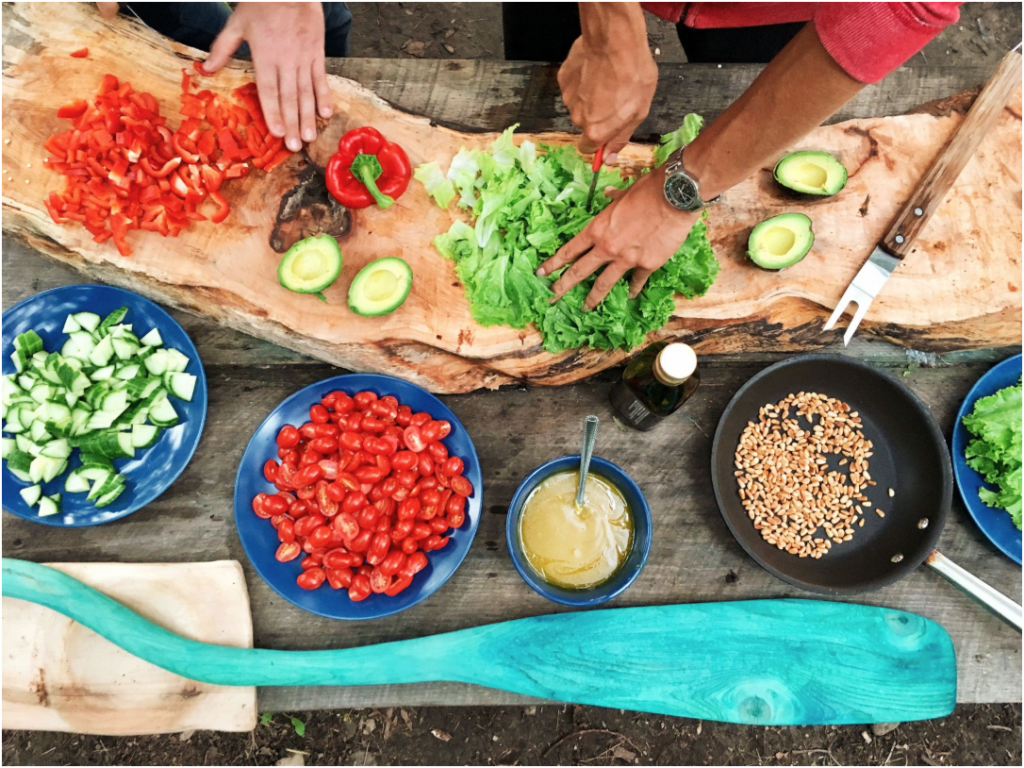
Header image “Crafting Time” is taken by Maarten van den Heuvel.
- Introduction
In the contemporary era, the expansion of artificial intelligence and digital automation has intensified conditions of social acceleration. As Hartmut Rosa (2013) argues, the capitalist organization of time imposes an increasingly accelerated pace of life that separates everyday experience from biological and organic rhythms (pp. 165–166). By replacing traditional “event time” with abstract and standardized temporal structures, modern production systems require the biological body to adapt to rigid clock-based intervals (p. 167). Within this hyper-technological environment, time is increasingly shaped by data-driven systems and algorithmic efficiency, contributing to forms of sensory exhaustion and temporal disorientation.
Against these accelerated digital conditions, a notable counter-current has emerged in contemporary narrative arts: a return to the intimate spaces of the kitchen and the tactile practices of gastronomy. While other everyday practices—such as walking, gardening, or craftwork—similarly engage slowness and tactile attention, the kitchen functions as a privileged site of temporal resistance due to its unique convergence of material transformation, somatic ingestion, and chronopolitical location. Unlike practices that merely alter bodily movement or craft durable objects, culinary labor is bound to the un-accelerable temporalities of organic matter—the thermal durations of fire, the chemical friction of fermentation, and the inevitable decay of ingredients. Furthermore, cooking is uniquely tied to metabolic necessity; its products are not externally observed but somatically ingested, directly integrating environmental time into the biological body. Finally, as a historically constrained site of domestic and reproductive labor, the kitchen becomes a potent chronopolitical space when reoccupied: it transforms a sphere often subjected to routines of efficiency into a primary enclave for reclaiming temporal sovereignty. Drawing on Henri Lefebvre’s (2004) framework of rhythmanalysis, the kitchen may be understood as a site of “rhythmanalytic resistance.” Lefebvre argues that everyday life is structured through the tension between the external “rhythms of the other”—the measured and institutionalized tempos of modern social organization—and the intimate “rhythms of the self” grounded in bodily existence (p. 102). He further suggests that, “through a certain use of time,” subjects may appropriate space in ways that allow lived temporal experience to partially withdraw from the linear and measured rhythms of state and capitalist time (p. 103). Within this context, culinary labor responds to such temporal tensions through repetitive and tactile engagement with material processes, interrupting the accelerated logic of algorithmic efficiency (pp. 101–102).
This paper explores the kitchen as a Foucauldian heterotopia (Foucault, 1986, pp. 24–26): a physical “other space” that operates according to temporal rhythms distinct from dominant digital regimes. Through a cross-cultural and transmedial comparative analysis of Banana Yoshimoto’s novel The Lid of the Sea (海のふた, 2004), Yuji Nakae’s film Zen Diary (土を喰らう十二ヵ月, 2022), and Tran Anh Hung’s film The Taste of Things (La Passion de Dodin Bouffant, 2023), this study examines how these texts construct what I term “haptic temporalities.” Specifically, this paper defines “haptic temporality” as an embodied mode of temporal perception generated through tactile material engagement and its corresponding narrative/cinematic aesthetics. Rather than understanding time as an abstract, metric, or digitized flow, haptic temporality articulates duration as something felt, handled, and somatically negotiated through the skin, muscles, and senses. Visually and narratively, it relies on a haptic aesthetic that emphasizes close-up textures, thermal friction, and the resistance of physical matter. Somatically, it operates through culinary labor that forces human bodily rhythms to synchronize with the un-accelerable speeds of organic decay and thermal transformation. In doing so, haptic temporality functions not merely as a slow culinary practice, but as an experiential orientation that restores temporal continuity, sensory depth, and somatic autonomy against the instantaneity of modern digital acceleration. By foregrounding tactile interactions—the manual shaving of ice, the washing of muddy roots, and the slow reduction of broths—these works re-materialize time as a lived and embodied experience.
While existing scholarship frequently approaches culinary narratives through the lenses of gender, nationhood, or memory, less attention has been paid to the relationship between gastronomy, tactile perception, and temporal politics. Studies of Banana Yoshimoto often categorize The Lid of the Sea within the framework of iyashi-kei (healing fiction), frequently treating its minimalist narrative structure as “low-stakes.” This article argues, however, that the significance of the novel lies precisely in its atmospheric and sensory qualities, where the tactile environment of the kakigōri (shaved ice) shop and the slow rhythms of everyday routine take precedence over dramatic conflict. Similarly, Zen Diary and The Taste of Things have been widely discussed for their visual lyricism, yet their engagement with slowness as an ethical reorientation toward everyday life and mortality remains insufficiently examined.
By synthesizing Lefebvre’s theory of rhythmanalysis with Laura U. Marks’ (2000) concept of haptic visuality and Byung-Chul Han’s (2017) philosophy of lingering (Verweilen), this study addresses this critical gap. It positions slowness not as passive inertia, but as a deliberate response to the pressures of accelerated modern life. In The Lid of the Sea, the repetitive turning of the ice shaver becomes a tactile metaphor for the gradual dissolution of emotional trauma. In Zen Diary, the preparation of seasonal roots aligns the aging body with cyclical and ecological rhythms, while The Taste of Things frames gastronomy as a contemplative engagement with duration, intimacy, and mortality.
Ultimately, this transnational investigation argues that the kitchen functions as a significant space for recovering embodied temporal experience within conditions of digital acceleration. These “slow aesthetics” operate as forms of ethical and sensory resistance, creating spaces in which time may be reconnected to bodily rhythms, material processes, and everyday duration. Following this introduction, the paper first establishes its theoretical framework before proceeding to the analysis of the three selected texts.
- Theoretical Framework: Social Acceleration, Embodied Temporality, and Rhythmanalytic Resistance
This article adopts Henri Lefebvre’s rhythmanalysis to examine how culinary spaces reorganize embodied experiences of duration. While Hartmut Rosa’s theory of social acceleration provides a macro-temporal diagnosis of late-modern exhaustion, Lefebvre offers a methodological framework for analyzing the tension between linear temporality and cyclical bodily rhythms in everyday life. Laura U. Marks’ concept of haptic visuality further demonstrates how these temporal tensions are materialized through sensory and tactile experience, while Byung-Chul Han’s philosophy of lingering illuminates the ethical and contemplative possibilities of slow culinary practices. To analyze how culinary spaces reorganize embodied duration, this study establishes a four-fold theoretical framework with a clear division of conceptual labor. First, Hartmut Rosa provides a macro-temporal diagnosis that Lefebvre lacks: Rosa conceptualizes late-modern “social acceleration” and the alienation resulting from digital speed, identifying the systemic loss of “resonance” with the material world. Second, Henri Lefebvre offers the micro-spatial methodology of rhythmanalysis, providing concrete tools to examine the friction between dominant linear-technical temporalities and cyclical bodily rhythms within everyday practices. Third, Laura U. Marks bridges theoretical temporality with narrative and cinematic form; while Lefebvre focuses on lived physical rhythms, Marks’s concept of haptic visuality explains the aesthetic mechanism through which texts and films translate tactile material encounters—such as texture, thermal movement, and surface resistance—into an embodied perception of duration for the audience. Finally, Byung-Chul Han supplies an existential and ethical horizon that moves beyond a simple, quantitative notion of “slowness.” Han’s concept of Verweilen (lingering) theorizes not merely a deceleration of movement, but a qualitative restoration of “fragrant time” (duftende Zeit)—a contemplative mode of presence that re-establishes narrative continuity and sensory depth against the fragmented instantaneity of the burn-out society. Together, these frameworks function synergistically: Rosa diagnoses the acceleration crisis, Lefebvre maps its rhythmic friction in space, Marks articulates its aesthetic representation, and Han illuminates its contemplative resolution.
2.1. Hyper-Velocity and Alienation: Hartmut Rosa’s Social Acceleration as the Temporal Condition of Late Modernity
Hartmut Rosa’s (2013) theory of social acceleration outlines the broader temporal conditions that shape the turn toward embodied culinary spaces. Rosa argues that late modernity is governed by an accelerated temporal regime that compels individuals to manage increasingly compressed expectations, producing forms of alienation in which subjects “pursue, of their own volition, courses of action that they do not prefer” (p. 317). This condition destabilizes the subject’s relationship to physical environments and everyday forms of continuity (pp. 317–318). As material and social conditions change at accelerating speeds, individuals lose the ability to assimilate themselves meaningfully to the world around them, weakening the familiarity and narrative continuity traditionally associated with domestic life (p. 318).
Under conditions of algorithmic efficiency and accelerated digital circulation, human life undergoes systemic desynchronization. Rosa associates this condition with Paul Virilio’s concept of rasender Stillstand (“frenetic standstill”), a paradoxical state in which technological acceleration ultimately produces temporal stagnation (cited in Rosa, 2013, p. 56). Rather than generating meaningful movement, this condition exceeds the subject’s adaptive capacities, producing forms of emotional exhaustion and detachment from sustained temporal continuity (p. 57).
Crucially, Rosa argues that acceleration also contributes to the “desensualization” (p. 143) of everyday life. As the lifecycle of objects becomes increasingly compressed, material environments lose durability and familiarity, disrupting the slow process of “becoming at home and familiar” (p. 318) through material appropriation (Aneignung). Within this context of sensory depletion, culinary practices acquire critical significance. By shifting attention toward the tactile and material dimensions of everyday life, the kitchen emerges as a temporal enclave—a space where the exhausted subject may partially withdraw from accelerated technological rhythms and recover forms of slow, embodied duration through sensory engagement with food preparation.
2.2. Henri Lefebvre’s Rhythmanalysis: Capitalist Rhythms and Embodied Cycles in Everyday Life
To understand how late-modern rasender Stillstand manifests within the micro-spaces of everyday life, this study employs Henri Lefebvre’s (2004) framework of rhythmanalysis. Lefebvre approaches modern reification through what he identifies as “the most concrete: rhythm” (p. 13), allowing the kitchen to be understood as a space where everyday temporal practices negotiate accelerated modernity.
While Rosa (2013) diagnoses a structural condition in which “nothing remains the way it is while at the same time nothing essential changes” (p. 283), Lefebvre provides a methodology for examining how this temporal paradox is experienced and resisted through the body. Social acceleration operates through linear capitalist rhythms: mechanical and quantified temporal structures oriented toward efficiency, repetition, and continuous production (Lefebvre, 2004, pp. 16, 18, 82). These dominant rhythms alienate the subject by suppressing embodied cycles associated with seasonal change, biological necessity, and organic decay (pp. 18, 82). Within everyday life, this tension manifests as arrhythmia (pp. 25, 78), a condition in which bodily rhythms become desynchronized from external temporal demands. The existential disorientation described by Rosa (2013, p. 248) may therefore be understood as an embodied consequence of this rhythmic conflict.
Within this framework, manual cooking emerges as a practice capable of restoring eurhythmia (Lefebvre, 2004, p. 30), or a more harmonious synchronization between bodily and environmental rhythms. Through repetitive and tactile actions—chopping vegetables, kneading dough, or tending a simmering broth—the subject interrupts accelerated digital rhythms and reorients attention toward the slower durations of physical matter (p. 30). Culinary labor cannot be entirely subordinated to abstract clock-time because cooking remains tied to material processes that unfold according to their own temporal logic. In this sense, the cook assumes the role of a Lefebvrian rhythmanalyst (pp. 30–31), using bodily rhythms to reappropriate domestic space and recover forms of embodied temporal experience. By reactivating sensory dimensions such as smell, touch, and repetition that accelerated modernity frequently marginalizes (p. 31), culinary practice reconfigures the kitchen as a space of rhythmic continuity and sensory attention.
2.3. Materializing Duration: Laura U. Marks’ Haptic Visuality and Tactile Duration
To connect Lefebvre’s spatial-temporal methodology with textual and cinematic analysis, this study draws on Laura U. Marks’ concept of “haptic visuality.” In The Skin of the Film, Marks (2000) distinguishes between optical visuality, which maintains a detached and rational relation to the image, and haptic visuality, a mode of perception in which the eye functions analogously to an organ of touch (p. 162). Rather than simply observing an image, the haptic gaze traces textures, grains, and surfaces, producing a sensory form of engagement with the medium itself (p. 162). Through this tactile mode of perception, readers and spectators experience the material resistances and alternative durations that Lefebvre conceptualizes as the rhythmic structures of everyday life.
Haptic visuality translates Lefebvre’s conflict of rhythms into an embodied sensory experience. By slowing down perception and resisting linear narrative progression associated with accelerated temporality, haptic textures compel the subject to experience time as layered, tactile, and materially grounded. Marks further argues that cinema preserves memory not through transparent representation, but through residual textures and sensory traces embedded within the image (pp. 172, 227–235). These sensory traces evoke what she terms “recollection-images” (pp. 50–51): moments in which private memory and embodied experience interrupt dominant visual regimes.
In this sense, haptic visuality materializes tactile duration as a form of resistance to accelerated perception. The tactile image slows sensory consumption and transforms the cinematic or textual work into a space where duration is physically experienced rather than merely cognitively processed. By treating vision as a tactile encounter, haptic visuality reorients the subject toward multisensory rhythms of memory, embodiment, and material continuity embedded within the work itself.
2.4. Chronopolitics of the Kitchen: Byung-Chul Han’s Art of Lingering (Verweilen) and the Ethics of Slow Temporality
Byung-Chul Han’s (2017) philosophy provides an ethical horizon for this culinary reconfiguration of time. Han’s concept of the “art of lingering” (Verweilen) extends Lefebvre’s concern with embodied temporality by emphasizing contemplative duration as a response to accelerated modern life. In The Scent of Time, Han argues that the contemporary temporal crisis emerges from a condition of “dyschronicity,” in which time loses coherence and disperses into disconnected moments (p. vii). Rather than focusing solely on acceleration itself, Han examines the loss of contemplative depth and sustained temporal experience within late modernity.
Within this framework, the kitchen may be reconceptualized as a space of rhythmic restoration rather than merely domestic labor. To linger before the stove is to suspend the demands of efficiency and productivity in favor of sustained attentiveness to gradual material transformation. Culinary practice thus exemplifies what Han describes as a non-coercive mode of engagement (schonend), in which the subject refrains from imposing immediate control and instead allows duration to unfold gradually (p. 102).
This practice of Verweilen also challenges what Lefebvre (2004) terms dressage: the disciplinary conditioning through which social systems train bodies to internalize mechanical repetition and institutional rhythms (pp. 47–48). While accelerated capitalist structures seek to synchronize the subject according to linear temporal imperatives, culinary labor reattunes bodily movement to the slower periodicities of material transformation. Lefebvre further suggests that domestic rhythms possess a particular capacity to resist the mechanization of everyday life because they remain closely connected to bodily repetition and cyclical continuity (p. 49). Through repetitive culinary gestures and sensory attentiveness, the subject may therefore recover a state of eurhythmia that counters the pathological dissonance of arrhythmia (p. 50).
Within Han’s philosophical framework, this eurhythmic dwelling allows time to regain depth and continuity. Culinary smells, tactile gestures, and slow material transformations preserve sensory dimensions of everyday life that accelerated modernity frequently marginalizes (Lefebvre, 2004, p. 31). Through lingering, the kitchen becomes a space in which time may partially withdraw from mechanical repetition and recover forms of embodied and contemplative duration.
- Culinary Spaces as Sites of Temporal Resistance
3.1. Melting Trauma: Ice Shaving, Haptic Healing, and Slow Duration in The Lid of the Sea
Temporal Dislocation and Urban Exhaustion
In The Lid of the Sea, Banana Yoshimoto represents emotional exhaustion through a condition of temporal dislocation. Mari experiences late-modern life as suspended and affectively muted under the pressures of accelerated urban existence. Her return to a coastal town in Shizuoka to open a small kakigōri (shaved ice) shop therefore signifies not only a geographical relocation but also a withdrawal from accelerated social rhythms into a slower and more tactile experience of everyday time. Yoshimoto conceptualizes this condition through what Hartmut Rosa (2013) terms the “contraction of the present” (Gegenwartsverschrumpfung), in which the validity of experience rapidly diminishes due to increasing rates of social change (pp. 76–77).
Mari describes herself as trapped within the “dizzyingly spinning wheels of the era” (Yoshimoto, 2018, p. 17). Under conditions of social acceleration, Rosa argues that modern life increasingly produces “desensualization,” reducing experience to a narrow sensory range while tactile, olfactory, and bodily dimensions become marginalized (2013, p. 143). Mari similarly observes that modern life has “swept away the small things that people used to cherish” (Yoshimoto, 2018, p. 11). Even within the rural setting, tourists remain isolated in hotel rooms, “too busy and too exhausted” (p. 9) to engage meaningfully with the surrounding environment.
This sensory depletion appears most clearly in Hajime, whose trauma is represented through temporal stagnation. Mari’s first encounter with Hajime’s burn scars causes her own heart to “freeze over” (p. 4), reflecting the immobilizing effects of trauma itself. Hajime later describes her condition as if “the time around me cannot flow … I alone am sitting still in one place forever” (p. 22). Trauma therefore emerges not only as emotional suffering but also as a disruption of temporal continuity and embodied participation in the present.
The Kakigōri Shop as a Rhythmanalytic Space
Against this background of temporal disruption, Mari’s shop functions as a localized site of rhythmic reorganization. Lefebvre (2004) argues that modern institutions discipline the body through repetitive forms of dressage, forcing biological rhythms into synchronization with external systems (p. 48). Mari’s culinary labor partially suspends this logic by grounding everyday experience in bodily repetition and material engagement.
Central to this process is the manual cast-iron ice-shaving machine. Its operation requires repetitive bodily effort and cannot be fully accelerated. Mari’s arm becomes exhausted through continuous labor against the physical resistance of ice (Yoshimoto, 2018, p. 14). The rhythmic scraping of the machine (p. 53) generates a recurring bodily pulse that coordinates human movement with the material properties of the ice itself. In Lefebvrian terms, this repetitive coordination between body and material rhythm suggests a movement toward eurhythmia, in which bodily and environmental rhythms enter into a more harmonious relation.
Mari also expresses hesitation toward the logic of expansion and efficiency associated with commercial standardization. She refuses invitations to transform the shop into a franchise, insisting instead on preserving the “handcrafted feeling” (p. 57) of something that exists “only as one, unique right here in this world” (p. 54). Through repetitive practices such as preparation and washing dishes, domestic labor becomes more than functional work; it becomes a way of recovering bodily rhythms otherwise subordinated to speed and productivity.
Haptic Atmosphere and Tactile Duration
The sensory dimension of this temporal recovery can be further understood through Laura U. Marks’ (2000) concepts of haptic visuality and tactile duration. Marks proposes that haptic perception operates through texture and bodily proximity rather than detached observation (p. 162). In Yoshimoto’s novel, narrative progression frequently recedes in favor of sensory and atmospheric detail, encouraging a mode of reading grounded in sensory proximity rather than distant observation.
This atmosphere is established first through thermal and tactile sensations. Mari describes the humid air of her hometown as something physically felt upon the skin: “It had been so long since I last gazed at the humid air, shining brilliantly…” (Yoshimoto, 2018, p. 6). Summer heat gradually accumulates, while the sounds of cicadas “layering over one another” become almost tangible in their intensity (p. 47). These descriptions reduce the distance between subject and environment, drawing attention toward bodily immersion within the surrounding atmosphere.
The novel intensifies this sensory effect through the depiction of culinary labor itself. The repetitive sound of the ice shaver (p. 53) becomes part of the tactile environment through which Mari encounters both the material world and other people. Mari carefully creates shaved ice that is “delicate, snow-white, beautiful” (p. 53), observing how something resembling a “fragile white mist” eventually returns to water (p. 55). The physical coldness of the ice is mediated through the repetitive fatigue of Mari’s body, making duration a tactile rather than abstract experience.
Mari directly articulates this temporal understanding when she remarks: “I always have the feeling that I am selling brief, beautiful fragments of time” (p. 55). Rather than functioning merely as a consumable commodity, the bowl of kakigōri becomes a temporary experience of embodied duration. For Hajime, eating shaved ice becomes a sensory experience that reconnects her to the immediacy of the present moment. The coldness and texture of the ice interrupt emotional numbness and reorient perception toward lived, bodily experience.
Melting as Temporal Healing and Fragrant Time
The process of melting functions as a central metaphor for temporal recovery. Byung-Chul Han (2017) argues that contemporary life produces a condition of “dyschronicity,” in which time fragments into disconnected moments lacking continuity (p. vii). Within this condition, trauma can be understood as a state in which time appears emotionally immobilized.
The transformation of kakigōri from solid ice into water provides a material image of gradual movement and change. Mari becomes fascinated by this process, observing how the delicate structure of shaved ice inevitably dissolves and disappears (Yoshimoto, 2018, p. 55). Rather than presenting healing as a sudden psychological resolution, Yoshimoto depicts emotional recovery as a gradual participation in processes of material transformation.
This slow engagement with ephemeral experience resembles what Han describes as the “art of lingering” (Verweilen) (2017, p. vii). The customers who gather at Mari’s shop do not simply consume food; they temporarily inhabit a slower temporal rhythm that allows attentiveness and rest. Mari herself reconceives labor not as a mechanism of productivity but as an opportunity to create “brief, beautiful fragments of time” (Yoshimoto, 2018, p. 55).
Ultimately, The Lid of the Sea suggests that emotional recovery is linked to gradual forms of sensory and temporal reorientation rather than dramatic narrative resolution. Through the interaction of the human hand, the repetitive movement of the ice-shaving machine, and the slow melting of ice, Yoshimoto presents recovery as a process grounded in tactile experience and embodied duration.
3.2. Aligning with Cyclical Time: Seasonal Labor and Biological Rhythms in Zen Diary
Ecological Attunement and Cosmological Cycles
While Section 3.1 examines temporal resistance through the tactile rhythm of a mechanical device in an urban setting, The Zen Diary (2022) expands this inquiry toward ecological and seasonal temporality. In Rhythmanalysis, Henri Lefebvre (2004) describes the body as a “bundle of rhythms” shaped by the tension between linear institutional time and cyclical natural rhythms (pp. 29, 48). In contrast to Mari’s negotiation with urban acceleration in The Lid of the Sea, Tsutomu’s life in a secluded Nagano cabin largely withdraws from industrial and technological temporality. His everyday practices are instead organized around seasonal cycles, agricultural rhythms, and the material conditions of the surrounding environment.
This ecological orientation is reflected in the film’s emphasis on cooking according to seasonal availability. Rather than imposing abstract schedules onto nature, Tsutomu structures his meals around what the land provides. Filmed across eighteen months to capture actual seasonal transitions, the film foregrounds culinary preparation as a gradual engagement with natural processes under the culinary supervision of Yoshiharu Doi. Recurrent scenes depict the gathering and preparation of wild vegetables, bamboo shoots, taro, chestnuts, and mushrooms. These acts emphasize slowness, repetition, and attentiveness to seasonal change.
Importantly, the film resists the sanitized uniformity associated with industrial food production. Vegetables retain traces of soil and irregular texture, preserving visible connections to the earth. Lefebvre (2004) notes that modern capitalist environments tend toward abstraction and sensory neutralization (p. 49). In Zen Diary, however, food preparation restores contact with material processes that industrial modernity often obscures. Culinary labor becomes inseparable from ecological rhythms.
As a result, the kitchen functions not merely as a domestic interior but as an extension of seasonal and cosmological time. Preparing food aligns daily existence with recurring environmental cycles rather than with accelerated productivity. When Tsutomu harvests vegetables beneath winter snow or gathers mushrooms in the autumn forest, his movements follow rhythms shaped by climate, growth, and decay. In Lefebvre’s terms, these practices approach a form of eurhythmia in which bodily rhythms enter into relative harmony with the surrounding environment (2004, p. 29).
Solitude, Domestic Ritual, and Contemplative Duration
Whereas the kakigōri shop in The Lid of the Sea creates a shared space of temporary respite, Zen Diary situates temporal resistance within solitude and domestic routine. Tsutomu’s cabin remains physically and temporally distant from the accelerated rhythms of urban life. This contrast is reinforced through the visits of his editor, Machiko, whose presence introduces the pressures of deadlines and productivity associated with metropolitan work culture.
Byung-Chul Han (2017) argues that contemporary acceleration produces a condition of fragmented and restless temporality, reducing subjects to perpetual activity. Against this condition, Han proposes the recovery of contemplative duration through practices of lingering and sustained attention (p. vii). Tsutomu’s daily routines exemplify this alternative temporality. Everyday domestic activities—washing vegetables, fermenting cabbage, chopping firewood, tending the stove, and preparing rice—are depicted through long takes and repetitive gestures that foreground duration rather than narrative progression.
Within a capitalist framework, such domestic labor may appear inefficient or unproductive. Yet the film presents these repetitive actions as forms of temporal grounding. Their significance lies not in output or efficiency but in their capacity to structure everyday life through continuity and attentiveness. Cooking becomes less an instrumental activity than a mode of dwelling within time.
This contemplative temporality also shapes Tsutomu’s relationship with memory and grief. For many years, he continues to keep the ashes of his late wife within the domestic space. Rather than treating mourning as something to overcome quickly, the film allows grief to coexist with ordinary routines. Han’s concept of lingering becomes particularly relevant here: time is not compressed into accelerated recovery or emotional closure but unfolds gradually through repetition, memory, and coexistence with absence. The rhythms of the kitchen—fermentation, simmering, and the steady crackling of firewood—provide continuity within this slower temporal horizon.
Organic Decay, Domestic Mourning, and the Acceptance of Mortality
The film’s engagement with cyclical temporality reaches its fullest expression through its treatment of aging, decomposition, and death. Rather than presenting mortality as a disruption to linear progress, Zen Diary situates death within ongoing ecological cycles of transformation and return. Lefebvre’s rhythmanalysis allows death to be understood not solely as rupture or arrhythmia, but also as part of a broader cyclical process embedded within natural rhythms.
This perspective becomes particularly visible during the domestic funeral of Tsutomu’s mother-in-law, Chie. Instead of transferring mourning entirely to institutional funeral systems, the family conducts rituals within the home. Food preparation occupies a central place in this process. Under the guidance of Yoshiharu Doi, the film lingers on the collective preparation of shojin ryori, focusing on the chopping of vegetables, boiling of roots, and arrangement of dishes offered to the deceased.
These scenes emphasize the physical and communal dimensions of mourning. Culinary labor slows down the living, requiring attentiveness to bodily movement, material processes, and shared ritual practice. Cooking therefore becomes integrated into the experience of grief rather than functioning separately from it. The preparation of food situates death within the continuity of everyday rhythms.
Following his later heart attack, Tsutomu’s own return to the kitchen further reinforces this cyclical understanding of existence. Cooking acquires an additional awareness of finitude, yet the film avoids dramatic confrontation or existential crisis. Instead, meals continue to be prepared through the same deliberate and repetitive gestures that structure the rest of his daily life. Mortality is approached not through transcendence, but through continued participation in seasonal and material rhythms.
Ultimately, Zen Diary presents the kitchen as a space where ecological time, bodily rhythms, and contemplative duration converge. Through seasonal labor, domestic ritual, and attentiveness to material transformation, the film proposes an alternative temporal model grounded in continuity rather than acceleration.
3.3. Simmering Eternity: Eurhythmic Duration and Culinary Labor in The Taste of Things
Intersubjective Eurhythmia and the Choreography of Labor
While temporal resistance operates through mechanical disruption in The Lid of the Sea (Section 3.1) and solitary ecological alignment in The Zen Diary (Section 3.2), Tran Anh Hung’s The Taste of Things (2023) significantly shifts the analytical scale from individual isolation to collective relationality. In The Zen Diary, Tsutomu’s reclamation of time is fundamentally introspective and vertical; it requires a withdrawal into a mountain hermitage where the single biological body aligns itself with macro-ecological, non-human cycles of seasonal growth and organic decay. In this solitary framework, temporal sovereignty is achieved through self-reliance and a direct dialogue between the self and nature. Conversely, The Taste of Things relocates this chronopolitical struggle into a horizontal, micro-social domain, presenting culinary labor as a form of intersubjective eurhythmia in Henri Lefebvre’s (2004) sense—a harmonious coordination of multiple biological and social rhythms operating in unison (p. 29).
This transition from the ecological to the relational illustrates that slow culinary practices do not merely rescue the atomized individual from modern acceleration, but can actively reconstruct the shared temporal fabric between subjects. In contrast to Mari’s exhausting manual labor or Tsutomu’s solitary practices, the nineteenth-century French chateau kitchen of Dodin and Eugénie establishes a collaborative, shared temporality. Within this space, external rhythms of acceleration are temporarily suspended not through geographical escape, but through a highly coordinated, multi-body choreography of culinary preparation. By moving from the vertical alignment with nature (Zen Diary) to the horizontal synchronization with another human being (The Taste of Things), the narrative demonstrates how the kitchen can render labor a site of deep interpersonal continuity. Cooking ceases to be a solitary meditation on transience; instead, it becomes a relational matrix where time is collectively calibrated and shared across human subjectivities.
This intersubjective eurhythmia is materialized through the film’s forty-minute opening sequence, which eschews non-diegetic musical scores. Relying on a dense diegetic soundscape—the clatter of cast-iron pots, the sizzle of searing veal, the rhythmic thud of cleavers, and the crackle of the wood fire—the scene engages the spectator directly with the sensory duration of the kitchen. Within this acoustic frame, the characters perform a carefully synchronized choreography of labor. The camera moves with a fluid tracking motion that follows the physical trajectories of bodies as they move across the sun-drenched space. There is a tacit synchronization developed through long-term collaboration between Dodin and Eugénie; after twenty years of shared culinary practice, their actions are highly coordinated. A silent glance or a timed hand-off of a copper saucepan occurs without verbal commands. Physiological and environmental rhythms—the breath of the cook, the heat of the stove, and the chemical transformation of the food—are woven into a shared temporal stream.
Consequently, this choreography recontextualizes the value of domestic labor. While domestic tasks are frequently marginalized as non-productive drudgery in accelerated societies, the film depicts this labor as a form of embodied skill and collaborative creativity. By staging a prolonged dialogue between the human hand, the culinary vessel, and the flame, the narrative frames time not as a scarce commodity to be spent, but as a duration to be collectively inhabited. The kitchen thus functions as a localized space of temporal negotiation where the body finds alternative pacing by engaging in shared, coordinated practices.
Simmering Duration versus Capitalist Exhibitionism: The Chronopolitics of Pot-au-Feu
The Taste of Things introduces a temporal architecture that can be conceptualized as “simmering duration.” This temporality operates as a form of resistance against late-modern social acceleration and what Byung-Chul Han (2017) diagnoses as the crisis of “exhibitionist time”—a regime where objects are stripped of their internal duration to be instantly exposed and consumed (p. vii). Crucially, this resistance operates on two interrelated analytical levels that connect the film’s nineteenth-century diegetic setting with contemporary digital conditions. Diegetically, the film dramatizes a late-nineteenth-century temporal conflict between industrial-bourgeois exhibitionism (represented by the Prince of Eurasia’s decadent banquet) and organic, tactile duration (embodied by Dodin and Eugénie’s kitchen). Extra-diegetically, however, Tran Anh Hung’s film functions as a contemporary cinematic intervention. For twenty-first-century viewers immersed in algorithmic hyper-velocity and fragmented digital media, the film’s prolonged, unhurried shots of culinary labor do not merely represent a bygone era; they actively construct a sensory shelter. By forcing the contemporary spectator to inhabit the un-accelerable rhythms of nineteenth-century cooking, the film deploys slow culinary aesthetics to challenge the instantaneity of modern digital reception.
This confrontation is set in motion when the Prince invites Dodin to an elaborate eight-hour banquet designed as a display of wealth and accumulation. The feast—overloaded with a constant parade of opulent dishes—functions as an aesthetic manifestation of what Hartmut Rosa (2013) terms “social acceleration” (p. 76). It presents a linear accumulation of culinary commodities where consumption outpaces authentic resonance. In response to this spectacle-oriented culinary logic, Dodin proposes to serve the Prince a single, traditional dish: a Pot-au-Feu. The critical force of the Pot-au-Feu lies in its divergence from commodity fetishism; its ingredients are inexpensive, but its value derives from a significant investment of duration.
Consequently, the preparation of the Pot-au-Feu enacts Han’s “art of lingering” (Verweilen) (Han, 2017, p. vii). The dish requires hours of simmering over a low fire, the meticulous skimming of froth, and waiting for the components to combine into a unified broth. This lingering duration alters perception, encouraging both the cook and the consumer to look beyond instant gratification and adapt to the material tempos of physical ingredients. By elevating a rustic stew within gastronomic practice, Dodin counters the spectacle-driven tempo of the elite, rendering the kitchen a space partially insulated from accelerated rhythms where time is experienced as a qualitative duration.
Sensory Materialization, Shared Palates, and Temporal Continuity
The culinary practices in the film also serve to preserve historical and romantic memory. In The Taste of Things, the awareness of human finitude is met with the materialization of affection through sensory and haptic experiences. Drawing upon Laura U. Marks’s (2000) concepts, the cinematic space highlights tactile qualities where memory is inscribed into the physical textures of food, connecting individuals through a shared palate (pp. 162–164).
This materialization is illustrated when Dodin cooks exclusively for an ailing Eugénie. Conscious of her failing health, Dodin enters the kitchen to express his devotion through food. The film frames the preparation of a clear consommé, poached oysters, and a dessert of braised pears with tactile intimacy. As Eugénie consumes the meal, her experience is deeply sensory; she responds to Dodin’s labor, registering his long-term care through the temperatures, textures, and flavors of the dishes. Flavor becomes a medium of intimate interpersonal communication. Reflecting Byung-Chul Han’s (2017) assertion that “fragrant time” requires a narrative thickness to bind memory together, this meal demonstrates how interpersonal bonds, anchored in manual labor, can establish continuity despite physical vulnerability (p. vii).
This materialization ensures that Eugénie’s subsequent death does not result in emotional or narrative stasis. The narrative depicts a generational transmission of culinary craft to the young prodigy, Pauline, establishing a sense of continuity. The original French title, La Passion de Dodin Bouffant, underscores this focus, framing culinary practice as a lifelong dedication involving both deep commitment and personal sacrifice. This temporal continuity is captured in the film’s final sequence: an unbroken, 360-degree panning shot revolving around the sunlit kitchen, weaving a memory of the two lovers into the contemporary space. Eugénie’s concluding declaration, identifying herself to Dodin as “your cook,” highlights their shared life-rhythm. Although human life remains finite, the film suggests that culinary practices may preserve forms of memory, affection, and continuity beyond individual mortality.
Ultimately, across the three narrative landscapes examined in this study, the kitchen functions as a localized space of temporal negotiation. Whether through the mechanical resistance of manual tools (The Lid of the Sea), the ecological attunement to seasonal cycles (The Zen Diary), or the intersubjective eurhythmia of coordinated labor (The Taste of Things), these films imagine temporary forms of resistance to accelerated modern temporality. In all three works, forms of emotional recovery and temporal reorientation emerge through tactile engagement with material rhythms rather than through dramatic narrative resolution alone.
- Conclusion: Embodied Temporality and Everyday Resistance in the Age of Algorithmic Speed
This study has examined the kitchen not as a site of alienated domestic labor, but as a chronopolitical space in which the pressures of modern social acceleration may be critically negotiated and temporarily suspended. Importantly, acknowledging the kitchen as a site of temporal resistance does not imply romanticizing culinary labor or ignoring its ambivalent historical reality. Historically and sociologically, domestic culinary practice has been deeply shaped by gendered expectations, class divisions, and invisible, uncompensated labor. The temporal autonomy theorized in these texts does not erase these structural constraints; rather, it operates within their very tension. Crucially, these works actively destabilize traditional gendered assumptions surrounding domestic labor: in The Zen Diary, this temporal and gendered reconfiguration reaches its peak during the mother-in-law’s funeral sequence. Departing radically from patriarchal East Asian traditions—where domestic food preparation for communal rituals typically falls as an uncompensated burden on women—it is the male protagonist, Tsutomu, who single-handedly commands the kitchen to prepare the sacred shojin ryori (temple vegetarian cuisine) for the mourners, while female visitors remain outside the culinary space and Machiko merely assists with gathering garden vegetables. Similarly, in The Taste of Things, Dodin—a wealthy male gourmand—actively participates in physical kitchen labor alongside Eugénie, culminating in his preparation of a meal specifically to nurture her during illness. By depicting male figures who actively engage in, share, and assume culinary labor, these texts disrupt the historical framing of the kitchen as an exclusively female-gendered burden. By holding together the structural ambivalence of domestic labor and its potential for tactile sovereignty, this paper argues that the kitchen serves not as an idealized escape from modern reality, but as a contested, embodied threshold where temporal agency is laboriously reclaimed.
Through a comparative analysis of three distinct literary and cinematic texts, the article identified several interconnected modes of temporal resistance. In The Lid of the Sea, resistance emerges through the repetitive and tactile labor of ice shaving, where manual culinary practice interrupts the accelerated rhythms of urban life and facilitates a gradual process of emotional recovery. In The Zen Diary, this resistance expands into an ecological, cyclical, and ritualistic mode of temporality, as the subject aligns bodily existence—and somatic care for others—with seasonal rhythms, organic decay, and natural cycles. Finally, The Taste of Things presents culinary labor as a collaborative and eurhythmic practice through which cooking becomes a medium for sustaining intimacy, memory, and continuity across time.
These three cultural representations of manual and embodied labor raise an important question regarding the significance of slow culinary practices in the contemporary age of algorithmic acceleration. In the digital era, social acceleration is no longer shaped solely by industrial clock-time, as described by Lefebvre or Rosa, but increasingly by predictive algorithms, data-driven systems, and the continuous demand for cognitive responsiveness. Under these conditions, time is often fragmented into a succession of discontinuous and rapidly consumed moments, contributing to forms of sensory exhaustion and temporal disorientation. Rather than inhabiting duration in a sustained or reflective manner, contemporary subjects are frequently compelled to adapt to the imperatives of speed, efficiency, and perpetual connectivity.
This algorithmic transformation alters the relationship between time and memory, as the constant demand for real-time responsiveness leaves little room for historical continuity or deep reflection. By replacing continuous duration with discrete, quantifiable instants, digital acceleration complicates the accumulation of meaningful experience. The significance of the kitchen in these narratives lies precisely in its structural reintroduction of latency and physical friction. Rather than operating as an absolute refusal of modernity, these domestic spaces establish a boundary where human perception is pulled back from digital abstraction and re-anchored into the un-accelerable properties of physical matter.
Within this context, the kitchen and the practice of manual cooking emerge as significant spaces for recovering embodied experiences of time. The material resistance of culinary labor—the density of root vegetables, the heat of fire, or the gradual transformation of simmering broth—cannot be fully reduced to the frictionless logic of algorithmic optimization. Cooking requires attentiveness to bodily rhythms, sensory engagement, and forms of temporal patience that stand in contrast to accelerated digital temporality. By representing culinary practice as a form of rhythmic and sensory participation in the material world, these narratives suggest that everyday acts of cooking may offer alternative ways of inhabiting time. Rather than functioning merely as nostalgic retreats from modernity, the kitchens depicted in these works become spaces in which slowness, sensory attentiveness, and embodied continuity remain possible within the conditions of contemporary digital life.
References
Foucault, M. (1986). Of other spaces (J. Miskowiec, Trans.). Diacritics, 16(1), 22–27. https://doi.org/10.2307/464648
Han, B.-C. (2017). The scent of time: A philosophical essay on the art of lingering (D. Steuer, Trans.). Polity Press. (Original work published 2009)
Lefebvre, H. (2004). Rhythmanalysis: Space, time and everyday life (S. Elden & G. Moore, Trans.). Continuum. (Original work published 1992)
Marks, L. U. (2000). The skin of the film: Intercultural cinema, embodiment, and the senses. Duke University Press.
Nakae, Y. (Director). (2022). The Zen Diary [Film]. Mizuki Productions; Asahi Shimbun.
Rosa, H. (2013). Social acceleration: A new theory of modernity. Columbia University Press.
Tran, A. H. (Director). (2023). The Taste of Things (La Passion de Dodin Bouffant) [Film]. Curiosa Films; Gaumont.
Yoshimoto, B. (2018). The Lid of the Sea (D. T. Hoa, Trans.). Nhã Nam & Writers’ Association Publishing House. (Original work published 2006)
