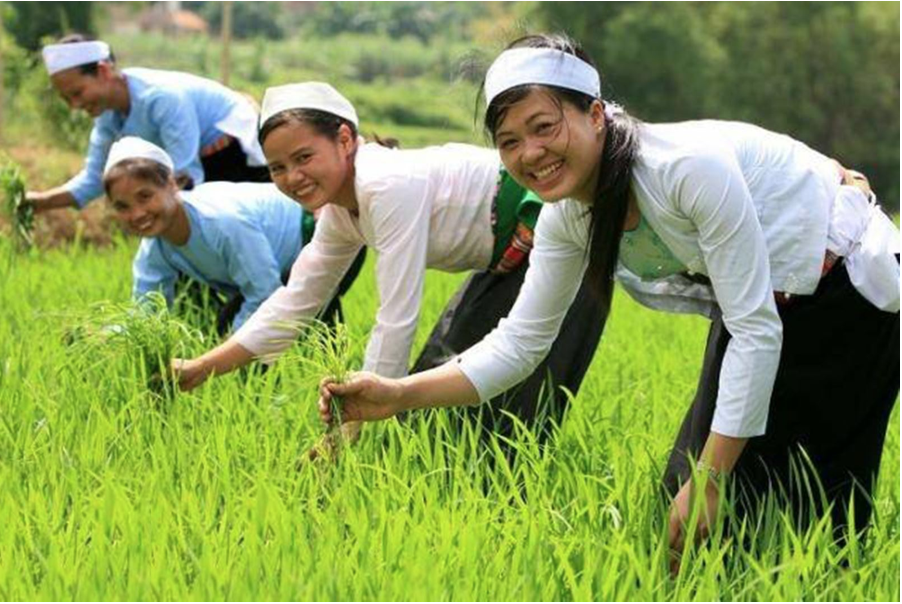
Climate Justice as Healing: Decolonizing Care in the Context of Ecological Crisis
Article by Nguyen Thi Ngoc Mai
Abstract:
The climate crisis is one of the most urgent challenges of the twenty-first century, yet it is not only an environmental issue but also a crisis of care, justice, and history. In Asia, climate-related harms disproportionately affect Indigenous peoples, rural communities, and informal laborers, who are often excluded from environmental decision-making and dominant narratives of climate solutions. This paper argues that climate justice must be reframed through the lens of healing, understood as a material and political process of addressing historical injustices and restoring relationships between people, land, and ecological systems. Legacies of colonialism, militarization, and extractive development have not only degraded environments but also disrupted cultural practices of care and collective resilience.
Drawing on case studies from Taiwan, Vietnam, and the Philippines, the paper examines how Indigenous and local communities enact ecological care through ancestral farming, forest stewardship, spiritual practices, and community-based resistance. These practices are approached as dynamic knowledge systems offering alternatives to extractive models of development. Integrating decolonial theory, care ethics, and political ecology, the paper contends that climate justice requires structural transformation, including the redistribution of power, recognition of Indigenous sovereignty, and restoration of non-extractive human-nature relations. In this framework, healing emerges as a political project central to achieving social, ecological, and epistemic justice.
Keywords: Climate justice, Ecological care, Indigenous knowledge systems, Decolonial environmental governance, Political ecology
Header image “Rotational swidden farming in Vietnam” from Northwest Vietnam Tourism is free to use.
- Rethinking Climate Justice Through Healing
The climate crisis is often framed as a technical problem centered on carbon emissions and green technologies. This framing overlooks the fact that the crisis is also a result of historical injustice, political inequality, and the breakdown of systems of care. Climate change is deeply connected to legacies of colonialism, forced development, and large-scale resource extraction, all of which have disrupted ecological and social systems (Johnson and Sigona, 2023; Whittle, 2022).
In Asia, climate impacts are not evenly distributed. Indigenous communities, rural populations, and informal laborers are among the most affected by extreme weather events, flooding, and ecosystem degradation. However, these groups are rarely included in national climate policies or international climate agendas (IDS Bulletin, 2022). Their marginalization extends beyond material loss. It includes the erosion of cultural ties to land, the suppression of local knowledge systems, and the dismantling of collective strategies for survival and care.
This paper argues that climate justice should be reframed through the lens of healing. Healing here is not metaphorical. It is a political and social process rooted in restoring damaged relationships between people, land, and life systems. Healing involves the return of autonomy to communities whose rights to care for their environments have been denied. It also includes the recognition of Indigenous knowledge, ecological stewardship, and spiritual practices as valid and necessary for climate futures (Lam and Trott, 2024; Whittle, 2022).
- Decolonial, Caring, and Ecological Foundations
This paper uses three theoretical approaches to analyze climate justice: decolonial thought, care ethics, and political ecology. These frameworks help explain why dominant climate policies fail to protect the most affected communities and how justice can be redefined as a process of healing.
Decolonial thought challenges the global systems of knowledge and power that were shaped by colonialism. It questions why certain ways of knowing, especially Indigenous and local knowledge, are ignored in climate decision-making. According to Whittle (2022), environmental harm is not only ecological but also rooted in histories of land theft and cultural suppression. Johnson and Sigona (2023) argue that healing from the climate crisis requires confronting the colonial roots of the problem. This includes recognizing how Indigenous peoples have been displaced and how their ecological practices have been replaced by extractive systems.
Care ethics focuses on relationships and responsibility. It sees care as a collective practice necessary for survival. Lam and Trott (2024) state that care should not be seen as private or apolitical. In many communities, caring for the land and each other is a form of resistance. For example, Indigenous rituals and community farming are practices that connect people to ecosystems and challenge the logic of exploitation. These forms of care build long-term resilience and social cohesion.
Political ecology studies how environmental issues are shaped by power relations. It shows that ecological harm is linked to political and economic systems. The IDS Bulletin (2022) explains that dominant climate strategies often support market-based solutions while ignoring the needs of marginalized communities. Political ecology helps identify who controls land, who benefits from development, and who is left out. This perspective supports a shift from top-down environmental management to community-led governance.
Together, these frameworks show that climate justice cannot be reduced to technical fixes. It must involve restoring land-based knowledge, redistributing power, and rebuilding care systems. Healing is a political process that challenges the structures that caused the crisis.
- Asian Experiences of Dispossession and Resistance
Southeast Asia: Colonial Legacies and Forced Development
In Southeast Asia, the relationship between people and land has been repeatedly disrupted by colonialism, militarization, and extractive development. These forces have altered traditional systems of livelihood and ecological care. During colonial rule, land was treated primarily as a resource for economic exploitation. Colonial governments imposed land tenure systems, introduced monoculture agriculture, and displaced communities from their ancestral territories (IDS Bulletin, 2022).
The expansion of militarized zones, especially in border regions and areas of geopolitical interest, has further severed human-land connections. Large infrastructure projects and economic corridors often prioritize national growth over ecological or social stability. These forms of state-led development have continued long after formal colonialism ended. For example, in postcolonial Vietnam and the Philippines, dam construction, logging concessions, and mining operations have displaced Indigenous and rural populations, leaving them with limited rights to land or participation in environmental governance (Institute of Development Studies, 2022).
According to Erl’s thesis (2021), policies that promote rapid industrialization in Southeast Asia often ignore the lived experiences of local communities. Development planning tends to be top-down, favoring foreign investment and resource extraction over community well-being or ecological sustainability. Land is often reclassified for economic purposes, removing it from customary ownership and eroding collective care practices.
The Routledge chapter on Indigenous land rights also highlights how legal systems in Southeast Asia frequently fail to recognize customary tenure. State authorities often define forested and agricultural areas as “idle” or “unproductive”, justifying their transfer to private investors or government projects (Routledge, 2023). These policies reflect the lingering influence of colonial categories that divide land into zones of utility and wilderness, ignoring Indigenous systems of stewardship.
This historical and ongoing pattern of forced development breaks the relational bonds between communities and ecosystems. It creates environmental harm while undermining traditional systems of knowledge and resistance. These structural conditions form the backdrop for understanding why ecological healing in Southeast Asia must begin with restoring land autonomy and dismantling extractive models of growth
Case Studies
a. Vietnam
Indigenous and ethnic minority communities in Vietnam, including the H’mông and Thái, maintain agricultural systems grounded in ancestral knowledge and customary land governance. A central practice is rotational swidden farming, which involves cultivating forest plots in cycles and allowing long fallow periods for ecological regeneration. Research shows that when practiced with traditional cycles, this method supports soil fertility, biodiversity, and watershed stability (Rambo, 2020; Tran, 2018; Nguyen, 2014; FAO, 2015). Although the state has discouraged or restricted swidden agriculture at various times, it remains fundamental to subsistence and ecological balance in mountainous regions (McElwee, 2022; UNDP, 2021).
These farming systems are closely linked to cultural and spiritual practices. Rituals associated with planting and harvesting reinforce relational understandings of land as a living entity that demands respect and reciprocity (Tan, 2023; IDS Bulletin, 2022; Salemink, 2015). Customary, community-based forest governance persists in many upland villages and regulates watershed protection, soil management, and fire control (Rambo, 2020; Salemink, 2013). These institutions face growing pressure from land reclassification and development policies that do not recognize customary tenure (Jamieson, 1998; Johnson and Sigona, 2023).
Large-scale infrastructure projects, including hydropower and mining, have displaced ethnic minority communities and submerged ancestral territories in the Central Highlands and Northwest. Resettled communities frequently lose access to farmland and forest resources and experience reduced participation in decision-making processes (Pham et al, 2023; UNDP, 2021). Development planning in Vietnam continues to operate through top-down decision-making that marginalizes Indigenous knowledge and excludes free, prior, and informed consent (Erl, 2021; Hue University, 2022).
In response, affected communities pursue legal petitions, public mobilization, and collaboration with environmental organizations. Others maintain traditional farming systems and ceremonial practices under restrictive conditions. These actions constitute forms of ecological care and political resistance rooted in place-based knowledge.
b. Philippines
Indigenous groups in the Philippines, including the Lumad in Mindanao and the Igorot peoples in the Cordillera, continue to defend their ancestral lands against mining, logging, and dam projects. These developments frequently move forward amid militarization, red-tagging, and contested forms of Free, Prior, and Informed Consent (FPIC), resulting in environmental degradation and repeated displacement of Indigenous communities (Delina, 2020; Global Witness, 2024; IWGIA, 2024).
The Lumad have resisted land encroachment through protest caravans and camps such as Lakbayan, community-run Lumad schools, and advocacy campaigns exposing human rights violations and corporate land-grabbing (Perez, 2019). Conflict resolution and community governance are also supported by Indigenous justice practices such as Lumad Husay, a conciliation-based approach that addresses disputes through collective deliberation and relational accountability (Simons, 2021). These practices prioritize social harmony and community welfare over punitive processes (Simons, 2021).
In the Cordillera region, Igorot communities mobilize through organized political protest and spiritual-cultural actions that reaffirm ties to ancestral territory. Ritual practices, including thanksgiving and agricultural ceremonies, are central to asserting territorial identity and obligations to protect land and water systems (Molintas, 2004; Delina, 2020). Research on Filipino cosmologies underscores the view that land is understood as a living being requiring respect and reciprocity, grounded in relationships with ancestors and nature spirits (Cervantes, 2023).
Spirituality is therefore integral to Indigenous environmental defense. Ceremonies function as public commitments to protect territory and declarations of community sovereignty in the face of state and corporate expansion (Delina, 2020). Indigenous resistance in the Philippines combines legal advocacy, translocal organizing, spiritual practices, and collective action to challenge extractive development and demand forms of development that safeguard land, community wellbeing, and cultural continuity.
 Image “Lumad protest in the Philippines” from AC Dimatatac is free to use.
c. Taiwan
The Atayal are one of Taiwan’s officially recognized Indigenous peoples, living primarily in the central and northern mountainous regions of the island. Historically, Atayal communities relied on upland farming, hunting, fishing, and forest gathering as major subsistence practices (Council of Indigenous Peoples, 2022).
A key feature of Atayal culture is the customary moral and social code known as gaga, which regulates community behaviour and relations with the natural environment, including hunting and resource use (Fang et al., 2015). Research on Atayal traditional ecological knowledge (TEK) emphasizes that these practices reflect long-standing interaction with the surrounding ecosystems and are grounded in relational responsibility rather than extraction (Fang et al., 2015).
Contemporary debates regarding Indigenous land rights remain politically significant. In 2017, members of Taiwan’s Indigenous groups, including Atayal participants, organized a prolonged protest on Ketagalan Boulevard in Taipei to demand the legal recognition of traditional territories and rights relating to hunting and cultivation (Taiwan Insight, 2017). The protesters argued that state land-classification frameworks redefined Indigenous territories as public resources and disregarded customary land relationships (Taiwan Insight, 2017).
Recent scholarship highlights continuing negotiations around land recognition, cultural continuity, and identity among Indigenous communities in Taiwan (Tang, 2023; IWGIA, 2024). However, there is limited empirical evidence confirming the existence of formalized Indigenous-led land-governance structures with legal authority under national land administration frameworks.
- Healing as a Political Practice
Healing in the context of climate justice is not a spiritual or private act. It is a political process that involves the restoration of collective autonomy and the redistribution of power. When communities demand control over their land, water, and forests, they are not asking for symbolic gestures. They are asserting their right to govern and sustain their environments on their own terms. This type of healing addresses the material consequences of colonization, forced development, and environmental degradation. It is grounded in reclaiming political authority and repairing community-led systems of care (Lam & Trott, 2024).
Climate justice requires more than emissions reduction or conservation policies. It demands a transformation in how societies relate to land and ecosystems. Johnson and Sigona (2023) describe healing as “restoring broken relations between people and the land.” This restoration is not personal or metaphorical. It is structural and collective. For example, re-establishing Indigenous stewardship systems, returning land to customary management, and halting extractive industries are all forms of healing. These acts interrupt ongoing ecological harm and reestablish sustainable relationships based on respect and reciprocity.
Care should not be seen as passive or apolitical. In many frontline communities, care practices such as maintaining ancestral farming systems, performing land-based rituals, and organizing local defense are central to survival. As Lam and Trott (2024) argue, care is a “radical act” that challenges colonial hierarchies and adultist structures. It is through care that communities resist displacement and build alternatives to extractive development. Therefore, care is not about softness. It is about endurance, responsibility, and refusal. Healing, in this sense, is a form of resistance. It enables communities to survive, persist, and imagine just futures beyond ecological crisis.
- Transformative Pathways for Climate Futures
Climate justice must be understood as inseparable from the process of healing. This healing involves repairing broken relationships between people and ecosystems, restoring community sovereignty, and reclaiming erased knowledge systems. The damage caused by colonialism, militarization, and extractive development has left communities with deep ecological and social wounds. Responding to this crisis requires more than technological solutions. It requires structural transformation.
This paper has argued for a theoretical framework that integrates decolonial thought, care ethics, and political ecology. Such an approach shifts the focus from state-centered and market-driven policies toward community-led solutions. As highlighted by Lam and Trott (2024), care is not merely a private emotion but a political tool of survival and resistance. Similarly, Johnson and Sigona (2023) emphasize that healing involves material actions to restore justice and autonomy.
Future climate policy and research must center on local and Indigenous communities. Models of transformation should prioritize their participation, leadership, and lived knowledge. Traditional farming, communal resource management, and spiritual land practices are not outdated customs. They are living knowledge systems capable of guiding sustainable futures (Erl, 2021; Routledge, 2023).
To move forward, governments and institutions must treat Indigenous knowledge as a valid and essential foundation for policy design. Climate justice is not only about reducing harm. It is about enabling communities to thrive with dignity, autonomy, and ecological respect.
References
Cervantes, C. (2023). Deep ecology, nature spirits, and the Filipino transpersonal worldview. International Journal of Transpersonal Studies, 42(1), 28-45. https://digitalcommons.ciis.edu/ijts-transpersonalstudies/vol42/iss1/3
Council of Indigenous Peoples. (2022). Atayal. https://www.cip.gov.tw
Delina, L. L. (2020). Indigenous environmental defenders and the legacy of extractivism in the Philippines. Energy Research & Social Science, 70, 101707. https://doi.org/10.1016/j.erss.2020.101707
Erl, S. (2021). Environmentalism and political subjectivity in Vietnam: A critical ethnography of everyday ecological care (Master’s thesis, University of British Columbia). https://open.library.ubc.ca/
FAO. (2015). Shifting cultivation, livelihood and food security. Food and Agriculture Organization.
Fang, S. Y., Yeh, H. Y., & Lee, Y. H. (2015). Atayal’s identification of sustainability, traditional ecological knowledge and indigenous science of a hunting culture. ResearchGate.
Global Witness. (2024). How the militarisation of mining threatens Indigenous defenders in the Philippines. https://www.globalwitness.org/
IDS Bulletin. (2022). Epistemological justice: Decoloniality, climate change, and ecological knowledge, 53(4).
Institute of Development Studies. (2022). Epistemological justice: Decoloniality, climate change, and ecological conditions. IDS Bulletin, 53(4). https://doi.org/10.19088/1968-2022.140
International Work Group for Indigenous Affairs. (2024). The Indigenous World 2024: Philippines. https://www.iwgia.org/en/philippines.html
International Work Group for Indigenous Affairs. (2024). The Indigenous World 2024: Taiwan. https://iwgia.org
Jamieson, N. L. (1998). The development crisis in Vietnam’s mountains. University of Hawai‘i – ScholarSpace. https://scholarspace.manoa.hawaii.edu/
Jamieson, N. L. (1998). Understanding Vietnam. University of California Press.
Johnson, A., & Sigona, A. (2023). Planetary justice and healing in the Anthropocene. In K. Brickell, M. Flitner, & C. Neelakantan (Eds.), Planetary justice: Reimagining sustainability and social justice in the climate crisis (pp. 15-30). Routledge. https://doi.org/10.4324/9781003465973-1
Johnson, H., & Sigona, N. (2023). Climate justice and broken relations: Reclaiming land through healing. Environmental Politics, 32(2), 210-225.
Johnson, R., & Sigona, N. (2023). Indigenous land dispossession in Southeast Asia. Journal of Peasant Studies.
Lam, S., & Trott, C. D. (2024). Intergenerational solidarities for climate healing: The case for critical methodologies and decolonial research practices. Children’s Geographies, 22(1), 1-15. https://doi.org/10.1080/14733285.2023.2301546
McElwee, P. (2022). Shifting policies for shifting cultivation: A history of anti-swidden interventions in Vietnam. Journal of Southeast Asian Studies, 53(1-2), 153-182. https://doi.org/10.1017/S0022463422000194
McElwee, P. (2022). Sustainability and environmental governance in Vietnam. Cambridge University Press.
Molintas, J. M. (2004). The Philippine Indigenous Peoples’ Struggle for Land and Life: Challenging legal texts. Arizona Journal of International & Comparative Law, 21(1), 269-306.
Nguyen, V. S. (2014). Land tenure and customary governance in the Northwest region. Vietnam Academy of Social Sciences.
Perez, R. D. (2019). Greed and grievances: A discursive study on the evolution of the Lumad struggle in Mindanao, 2010-2019. Journal of Ethnic and Cultural Studies, 6(2), 65-79.
Pham, H. T., Pham, V. C., & Bui, T. N. (2023). Impoverishment persistence in hydropower dam-induced resettled communities: A sociological investigation on livelihood and food security in Vietnam. Social Sciences, 12(4), 222. https://doi.org/10.3390/socsci12040222
Pham, K. T., et al. (2023). Hydropower displacement and ethnic minority livelihoods in Vietnam. Sustainability Journal.
Rambo, A. T. (2020). Swidden agriculture and environmental knowledge in the uplands of Vietnam. East-West Center.
Routledge. (2023). Planetary justice: Reimagining sustainability and social justice in the climate crisis. Routledge Publishing.
Salemink, O. (2013/2015). The ethnography of upland minorities and resource governance in Vietnam. Routledge.
Simons, J. L. (2021). Lumad Husay (Indigenous Conciliation): Decolonizing justice and re-storying culture in Mindanao, Philippines (Doctoral dissertation, University of Otago). University of Otago Research Archive. https://www.academia.edu/78730727
Taiwan Insight. (2017). The roots of Taiwan’s Indigenous peoples’ protests. https://taiwaninsight.org
Tan, N. (2023). Cosmologies of the uplands and relational ecology in Southeast Asia. Comparative Anthropology.
Tan, N. Q., Van Chuong, H., Linh, N. H. K., Tung, P. G., Dinh, N. C., & Tuyet, T. T. A. (2023). Climate shocks and responses: Perspectives and experiences of ethnic minority farmers in rural mountainous regions of Central Vietnam. Heliyon, 9(4).
Tang, A. (2023). Indigenous forest stewardship in Taiwan. Taiwan Journal of Indigenous Studies.
Tang, H. (2023). Indigenous identity and territorial claims in Taiwan. SSRN.
The People’s Resistance and Struggle Against Large-Scale Mining in Mindanao. (2025). ResearchGate. https://www.researchgate.net/publication/388103387
Tran, H. N. (2018). Traditional swidden farming in the Central Highlands. Vietnamese Journal of Ethnology.
Truong, H. T. (2022). Navigating resettlement practices in large infrastructure development in Vietnam. Hue University Journal of Science, 131(6B), 127-139.
UNDP. (2021). Ethnic minority livelihoods and land governance in Vietnam. United Nations Development Programme.
Whittle, M. F. (2022). Decolonizing environmental philosophy in the Anthropocene (Master’s thesis, Queen’s University). Queen’s University Research Repository.
