Healing under Empire: Private Doctors, Families, and the Politics of Care in Colonial Vietnam (1880–1945)
Article by Mai Thi My Vi
Abstract:
This study examines the socio-medical dynamics of Vietnam during the French colonial period, with a focus on the complex interactions between private doctors, Vietnamese families, and colonial authorities in medical practice from 1880 to 1945. Moving beyond traditional ideas that emphasise top-down colonial control through public hospitals and cleanliness initiatives, this study emphasises the critical role of Vietnamese private physicians, many of whom were trained in urban medical schools in Hanoi or France, as crucial mediators. Additionally, the French Assistance Médicale Indigène (Indigenous Medical Assistance) initiative, established in 1905 to expand public health services across Indochina and gradually phased out after 1945, was designed to assert imperial authority and inadvertently fueled the expansion of private clinics by allowing Western-trained Vietnamese physicians to establish their own clinics. These physicians offered health care outside government agencies and incorporated Western medical concepts into culturally appropriate techniques for local people. Meanwhile, the Vietnamese families negotiated a complicated medical environment, weighing traditional therapies, private clinics, and government healthcare and making strategic judgements about when and how to use each method. French colonial administrators sought to manage and utilise these private clinics to advance public health goals, thereby expanding the government’s influence while attempting to assert medical authority.
This study examines how private doctors, local people, and French authorities negotiated to establish Vietnam’s colonial healthcare system, utilising archival documents, medical advertisements, and contemporary periodicals as sources. Instead of telling an obvious path of control, it reveals a tense area where authority, aspiration, and care are intertwined. When positioned within the larger histories of care under crisis and unequal conditions, these encounters reveal healing as a relational and moral practice, a space where human beings and beliefs are constantly redefined. By doing so, the study encourages reflection on the persistent connections between health, authority, and accountability that continue to drive the politics of equality and care today.
Keywords: Colonial Vietnam, private medicine, Assistance Médicale Indigène, politics of care, medical pluralism, Vietnamese doctors
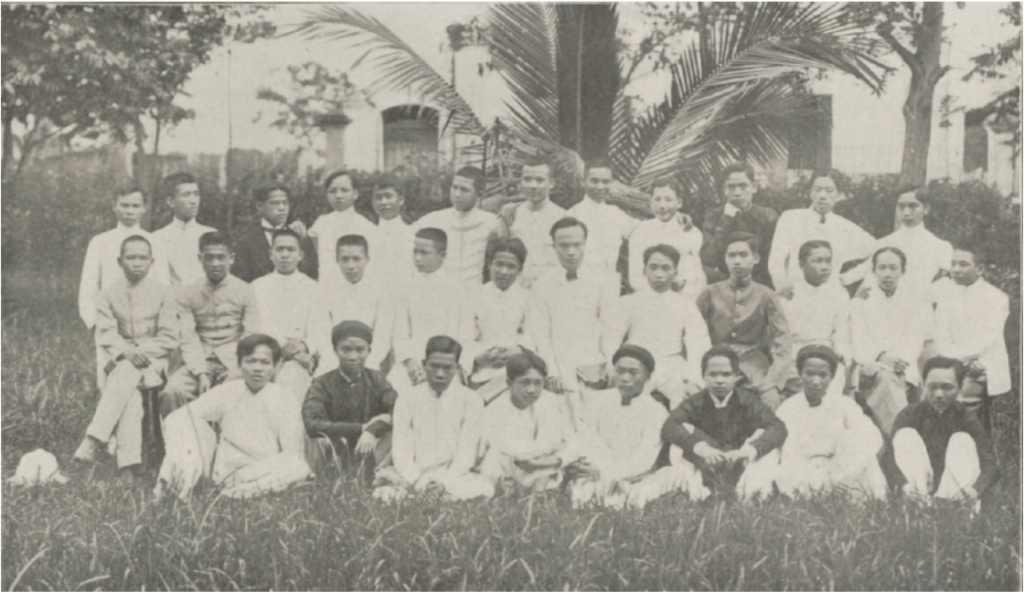
Header image “Group of Students – Medical Section” (from La Dépêche coloniale illustrée, 15 December 1908, p. 322) by De Boisadam is in the public domain.
Introduction
In the nineteenth and twentieth centuries, the French colonial empire regarded Western medicine as a means of “civilising” its colonial populations. In Vietnam, the French Governor-General Paul Beau formally unveiled the Assistance Médicale Indigène (AMI), or Indigenous Medical Assistance plan, in 1905 to provide healthcare for Vietnam’s indigenous population (Monnais, 2006; Vann, 2003). Established under the Indochina Health Service [1], the AMI integrated hygiene, immunisation, and rural dispensary programmes into a centralised network extending France’s mission civilisatrice into Vietnamese society. Between the 1910s and 1930s, Vietnam’s AMI expanded in stages, establishing provincial hospitals, mobile sanitary units, and training schools in Hanoi and Saigon (Monnais, 1999). Existing scholarship depicts Vietnamese practitioners mainly as assistants implementing French policies, portraying the AMI as a top-down system with limited attention to Vietnamese agency.
This article focuses on Vietnamese physicians within the colonial medical system, examining how they navigated the intersection of state control and local agency. Drawing on personnel dossiers from the National Archives Centre No. 1 (Hanoi, Vietnam), French and Vietnamese archival sources, and periodicals such as Khoa Học Tạp Chí (Popular Science Review), Vệ Sinh Báo (The Hygiene Journal), and Bảo An Y Báo (The Journal of Public Health and Safety), this study demonstrates that Vietnamese doctors were not passive agents. They mediated between French medicine and Vietnamese society, adapting techniques to local conditions, and many carved out autonomy by founding private clinics operating alongside, and sometimes in tension with, state healthcare.
The study argues that Vietnamese doctors occupied a dual position: contributing to the AMI’s colonial project while pursuing professional ambitions and serving local needs on their own terms. During the interwar period, many physicians transitioned into private practice to increase their income and achieve professional independence. Vietnamese families exercised choice, combining traditional therapies with services from French hospitals and Vietnamese physicians. Overall, colonial medicine in Vietnam emerges not as a system imposed unilaterally from above, but as contested terrain negotiated among state authorities, market forces, professional ambitions, and community needs.
The AMI Career Ladder: Opportunity and Constraint
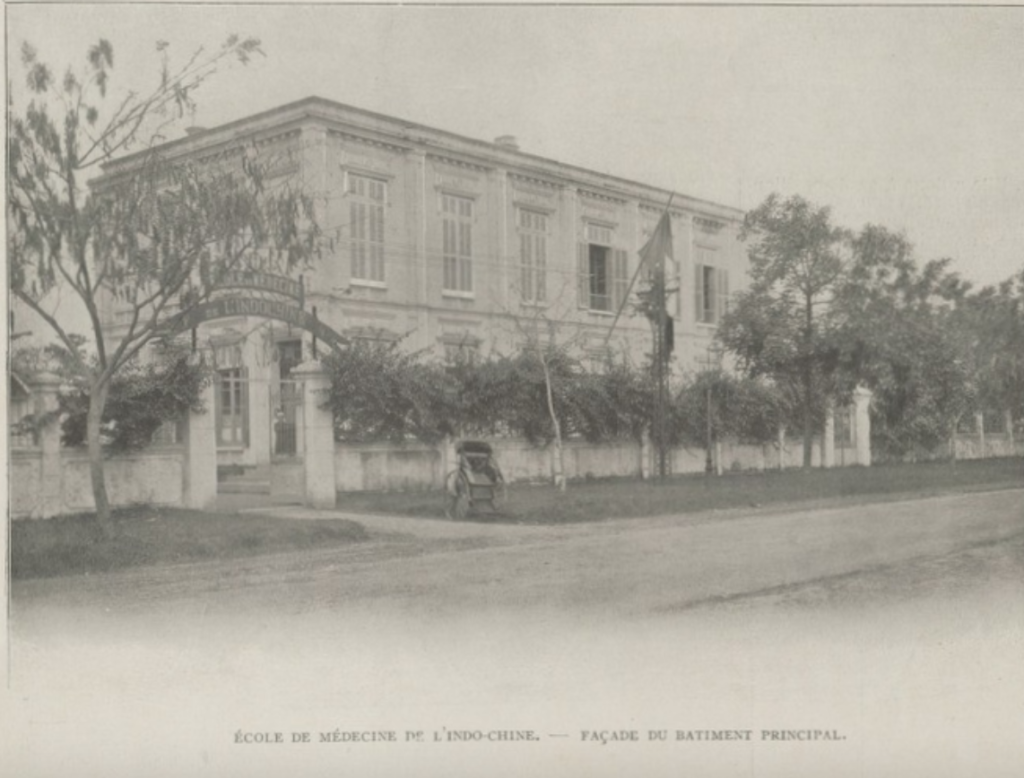
Image “Indochina School of Medicine – Facade of the Main Building” (from La Dépêche coloniale illustrée, 15 December 1908, p. 321) by De Boisadam is in the public domain.
Under the restrictions of colonial hierarchy, the AMI provided Vietnamese doctors with a structured but limited career path. Standard progression started with probation and competitive exams, then advanced gradually through a graded class system that paralleled but remained subordinate to the European hierarchy (Monnais, 1999; Vann, 2003). Graduates of the École de Médecine de Hanoi (Hanoi Medical School) typically served as auxiliary trainee doctors before appointment as indigenous doctors within the indigenous cadre (Monnais, 2006). Their careers usually began at sixth-class, with possible promotion to fourth-class after years of service [2], favorable evaluations, and sometimes additional qualifications. Due to persistent institutional and racial barriers, few advanced beyond this intermediate level (Monnais, 1999).
The significance of the indigenous cadre in extending Western medicine beyond Hanoi and Saigon was acknowledged by colonial planners, who recognised that native practitioners were needed to reach “the most remote points” of the protectorates (Monnais & Tousignant, 2006). Along with nurses and midwives, indigenous doctors became the linchpin of rural care, working under the oversight of European supervisors. This structure reflected the dual logic of colonial medicine: Vietnamese doctors were indispensable for geographical coverage and cultural mediation, yet their subordination was carefully maintained through formal rank distinctions, salary differentials, and administrative surveillance.
The career of Dr Trần Văn Lai (1923–1938) illustrates both possibilities and limitations. Appointed in November 1923 as a fourth-class auxiliary doctor in Hưng Yên province, he began at the Bần Yên Nhân dispensary, following the typical pattern of rural postings. In January 1926, he transferred to the Indigenous Hospital of the Protectorate in Hanoi. After passing the competitive examination in 1928, he attained the status of trainee doctor; new regulations then extended European-style family and housing allowances to qualified Vietnamese doctors. In 1929, he obtained titular status as a sixth-class physician (NAC 1, File No. 437) [3].
Throughout the 1930s, Lai advanced steadily but within clear boundaries. By 1936, he had reached fifth-class and was assigned to the tuberculosis examination department at the Indigenous Hospital in Hanoi, receiving a special allowance of 3,600 piastres. In 1937, he traveled to France to attend the Paris International Exposition, an exceptional privilege. His subsequent promotion to fourth-class represented the typical ceiling for Vietnamese doctors under the colonial system (NAC 1, File No. 437).
Dr Lai’s trajectory embodies the contradictions of colonial medical employment: dedication and competence could secure professional recognition and material benefits, yet advancement remained structurally constrained by racial hierarchy.
As both a cultural intermediary and a public health agent, he navigated between colonial authority and the health needs of Vietnamese communities, achieving respect within the system while remaining fundamentally subordinate to French physicians of equivalent training and experience.
Vietnamese Doctors as Elite Intermediaries in Colonial Society
While most Vietnamese physicians encountered rigid career ceilings, a small cohort achieved exceptional prominence through advanced French credentials, distinguished service, and strategic engagement with colonial authorities. These elite doctors held positions of influence that extended beyond routine medical work, contributing to scientific research, participating in public health campaigns, engaging in educational and philanthropic activities, and becoming prominent figures in Vietnamese intellectual life. Their bicultural fluency, combined with a command of the French language and biomedicine, along with deep knowledge of Vietnamese culture, enabled them to operate as cultural brokers who negotiated between colonial structures and indigenous aspirations.
Dr Trương Đình Tri (born 1890 in Hanoi) exemplified this elite stratum of indigenous doctors. Initially trained at Hanoi Medical School, he pursued advanced studies in France and obtained a Doctor of Medicine degree from the University of Montpellier in 1920. His career spanned both military and civilian appointments across Tonkin’s provincial medical system. Dr. Tri’s exceptional dedication and expertise earned him rare recognition: promotion to first-class indigenous doctor in 1935, one of the highest ranks ever achieved by a Vietnamese doctor of his generation. This advancement represented not only personal achievement but also the colonial regime’s strategic interest in showcasing exemplary cases of the “civilizing mission”. Colonial authorities consistently praised Dr Tri’s “devotion, intelligence, and moral qualities” in official evaluations (NAC 1, File No. 328). His award of the Légion d’Honneur symbolized the regime’s effort to celebrate and co-opt cooperative indigenous elites. Beyond administrative approval, Dr Tri made substantive contributions to Vietnamese public health, particularly through innovative approaches to leprosy treatment that benefited both patients and national disease control efforts. His work thus served dual purposes: advancing Vietnamese health outcomes while legitimizing the claimed benevolence of colonial medicine. However, this success existed within a framework of structural inequality. Despite holding a French doctorate and achieving a first-class rank, Dr Tri remained subject to French supervision, and his professional advancement depended on colonial approval. His attempts to assert greater autonomy, including a request for unpaid study leave in 1921 and an attempted resignation in 1924, were rejected by authorities unwilling to lose a valuable subordinate (NAC 1, File No. 328). Recognition, in other words, came with strings attached.
Other prominent physicians combined medical practice with broader civic leadership. Dr Lê Văn Chỉnh (born 1879) served as a third-class auxiliary doctor in Nam Định and Phủ Lý during World War I, earning a French commendation for his expertise and dedication (NAC 1, File No. 52173). Beyond his clinical work, he actively participated in Buddhist reform movements and local educational initiatives. Similarly, Dr. Đặng Vũ Lạc rose from trainee physician in Hanoi to fifth-class indigenous doctor, directing provincial hospitals in Hòa Bình and Phủ Lý before resigning in 1935 to pursue private practice (NAC 1, File No. 236). These physicians extended AMI services to rural populations while also engaging in cultural and social reform activities that aligned with emerging nationalist consciousness.
The intellectual contributions of elite Vietnamese doctors extended beyond clinical settings. Many contributed to Vietnamese-language medical journals, translating scientific knowledge into accessible vernacular prose. They organized charitable clinics, maternal health campaigns, and hygiene education programmes in collaboration with local associations. These initiatives often aligned with colonial health objectives yet arose from indigenous agency and addressed locally identified priorities such as maternal mortality, endemic diseases, and community-based care.
By the late 1930s, some elite doctors began articulating more explicit critiques of colonial inequality. Despite honours and recognition, they remained structurally subordinate, unable to direct major hospitals or achieve full professional parity. When the Democratic Republic of Vietnam was established in 1945–1946, several prominent physicians, including Dr Luyện, joined the new government’s healthcare administration, bringing expertise to postcolonial nation-building (Marr, 2013). The elite intermediaries shaped by colonial medicine thus became the architects of Vietnam’s independent health system.
Colonial Restrictions through Bureaucracy, Surveillance, and Racial Hierarchy
Despite their indispensability to the AMI, Vietnamese physicians operated under persistent institutional constraints that circumscribed their professional autonomy and reinforced their subordinate status. The French colonial administration employed multiple mechanisms of control, including bureaucratic procedures, moral surveillance, salary disparities, and formal restrictions on the scope of practice. These measures revealed the fundamental contradiction at the heart of colonial medicine: indigenous doctors were essential for public health delivery, yet they could not be granted full professional equality without undermining racial hierarchy.
The bureaucratic apparatus surrounding AMI employment was elaborate and intrusive. Admission to the medical corps required extensive documentation: criminal background checks, birth and health certificates, attestations of moral character, and recommendations from French officials (NAC 1, File No. 69462). The case of Dr Đặng Trần Anh (1912–1924) illustrates this gatekeeping process. Following the appointment, doctors submitted annual individual performance reports that were reviewed at multiple levels, from local health directors to the Résident Supérieur and the Inspector General. This constant oversight reflected both administrative thoroughness and colonial mistrust. Promotions and transfers required approval from the Governor-General, provincial governors, and financial controllers, linking professional advancement as much to political conformity as to medical merit (Monnais, 1999). Vietnamese physicians thus navigated a labyrinthine system in which every advancement reinforced their simultaneous indispensability and subordination.
Beyond bureaucratic hurdles, Vietnamese doctors faced explicit restrictions based on racial categorization. Initially classified as auxiliary doctors, they were authorized only to treat “native” patients and prohibited from supervising French colleagues or directing major hospital departments. Even physicians with French medical degrees encountered this professional ceiling. Dr Trương Đình Tri, despite holding a Montpellier doctorate, and Dr Nguyễn Văn Luyện, who qualified in Paris in 1928, both sought advanced French credentials partly to strengthen their claims to professional parity, which remained only partially recognized (Monnais, 2006). Reforms in the late 1920s modestly improved prospects, allowing French-trained Vietnamese to reach higher ranks in Indochinese medicine and receive allowances closer to European levels, but fundamental salary disparities and hierarchical divisions persisted through World War II (Monnais & Tousginant, 2006).
The social position of Vietnamese physicians reflected this persistent ambivalence. On one hand, they enjoyed a respected status as members of a Western-educated professional class, earning stable incomes and occasionally participating in colonial social functions. On the other hand, many French administrators continued viewing them primarily as “useful subordinates” rather than professional equals. This attitude surfaced in performance evaluations that mixed praise with paternalistic scepticism. Dr Nguyễn Văn Luyện, despite consistently high marks, was described in reports as “quite independent” and requiring close supervision. A senior administrator, noting his return from Paris, criticized his “lack of maturity” and “tendencies to inaccuracy” (NAC I, File No. 49/244). Such language reveals the dual logic of colonial judgment: competence was acknowledged, but autonomy was suspect, especially when Vietnamese physicians demonstrated initiative or local loyalty.
Moral surveillance intensified these structural inequalities. Vietnamese doctors were held accountable not only for professional competence but also for perceived ethical or moral failings. The case of Dr Vũ Kim Minh (1922–1923) exemplifies this disciplinary apparatus. Investigated in Lai Châu for negligence and misconduct, including premature patient discharges and allowing his common-law wife to exploit hospitalized women, he received a formal reprimand and permanent notation in his file for “excessive libertinage” and “weakness of character” (NAC I, File No. 53451). In such cases, professional failures were often reframed as personal moral deficiencies that required paternal correction. This moralizing discourse reinforced Vietnamese doctors’ status as perpetual subordinates in need of French guidance, regardless of their medical qualifications.
These multiple constraints, including bureaucratic, professional, and moral, created significant frustration among Vietnamese physicians. Some responded by seeking additional training abroad to enhance their standing. Others, disillusioned with racial bias and administrative obstacles, chose to leave public service entirely. By the 1930s, resignation to enter private practice had become an increasingly common strategy for escaping colonial subordination while maintaining a medical career.
The Turn to Private Practice
By the late 1920s and accelerating through the 1930s, a significant number of Vietnamese physicians resigned from AMI service to establish private clinics. This shift created a substantial realm of Vietnamese-controlled healthcare operating outside direct state supervision. The turn to private practice reflected multiple motivations: the pursuit of professional autonomy, a desire for higher income, frustration with the colonial hierarchy, and a response to growing patient demand for accessible, culturally attuned medical care. The result was a transformed medical landscape in which state hospitals, private Vietnamese clinics, and traditional healing practices coexisted and competed with one another.
Structural and economic changes in the late colonial period enabled this transition. Initially, AMI contracts required graduates to remain in state service, and resignations were rare. However, as the number of licensed physicians grew and colonial budgets faced the pressures of the Depression era, regulations began to relax. Decrees issued in the late 1920s permitted doctors to resign and enter private practice upon obtaining a license and signing a pledge not to treat European patients, thereby maintaining racial boundaries within the medical marketplace (NAC I, File No. 6255 & 49/244). By the early 1930s, the Supreme Residency of Tonkin began systematically recording permits under the heading “Opening of Private Medical Offices by Indigenous Doctors” (NAC I, File No. 6255). This policy shift represented a pragmatic compromise: regulated private clinics expanded medical coverage without imposing full financial burden on the colonial state, while physicians gained freedom from direct administrative control.
Financially, they could charge consultation fees several times higher than AMI salaries; landowners, officials, and merchants were willing to pay premium rates for personalised care (Monnais, 1999). Professional autonomy was equally important: independence allowed physicians to control patient relationships, treatment modalities, working hours, and practice location without parental French supervision. This autonomy subtly redefined medical authority and prestige, positioning Vietnamese doctors as independent professionals rather than colonial subordinates.
Dr Nguyễn Văn Luyện’s trajectory exemplifies this transition. Initially appointed in 1919, he served in provinces including Thái Nguyên, Lào Cai, and Phú Thọ, consistently earning evaluations of 18–19.5 out of 20 (NAC I, File No. 49/244). After completing his baccalauréat in 1924 and earning a certificate in scientific studies in 1925, he pursued medical studies in France, obtaining his Doctorate from the University of Paris in 1928; his thesis on infant mortality received a silver medal (NAC I, File No. 49/244). Upon returning to Indochina, he briefly worked as a fourth-class doctor in Hưng Yên and Phúc Yên before resigning from state employment in January 1931 to establish a private clinic at 8 Rue de la Citadelle in Hanoi. His transition from distinguished AMI service to independent practice reflected both the attractions of autonomy and the persistent frustrations of colonial subordination.
The case of Dr Nguyễn Văn Luyện was not exceptional. By the mid-1930s, over a quarter of Vietnamese-trained physicians had entered private practice; in Saigon, approximately 70–75% of new graduates chose private careers over state employment (Monnais, 2010). Within a generation, the medical landscape evolved from a state-dominated system to a hybrid economy featuring a substantial and growing Vietnamese private sector. This transformation fundamentally altered power dynamics: while the colonial government retained regulatory authority, Vietnamese doctors now operated with significant independence, building professional reputations and patient bases outside state control.
A Plural Medical Marketplace: Patient Choice in the Context of Cultural Authority and Political Implications
The proliferation of private clinics created a new medical environment characterized by competition, patient choice, and negotiated authority. Private practitioners offered services contrasting with the hierarchical atmosphere of public hospitals. Their shared language, customs, and moral frameworks created distinctive bonds of trust. Vietnamese families now have the option to choose among colonial hospitals, Western-trained Vietnamese doctors, and traditional healers, creating a pluralistic medical marketplace. Private practitioners positioned themselves strategically, charging moderate fees (typically 2–3 piastres per consultation at Dr Luyện’s clinic) that placed them between expensive European doctors and traditional healers while offering Western medical credentials. Private practitioners positioned themselves strategically within this spectrum, charging moderate fees (typically 2–3 piastres per consultation at Dr Luyện’s Hanoi clinic) that placed them between expensive European doctors and traditional healers while offering Western medical credentials (NAC I, File No. 6255; File No. 49/244). This intermediary position reflected both physicians’ agency in crafting professional niches and families’ adaptive strategies in navigating medical options, considering factors such as trust, cost, and perceived efficacy (Monnais & Tousignant, 2006).
Private practitioners also became important public intellectuals, contributing to debates on medicine, modernity, and Vietnamese society. Dr Nguyễn Văn Luyện advocated a synthetic approach to therapeutics, arguing that Western medicine should systematically study and incorporate proven Vietnamese remedies rather than dismissing indigenous pharmacology as superstition. He emphasized the empirical value of traditional Vietnamese medicine and its suitability to local bodies and environmental conditions (Nguyễn, 1929). At his Hanoi clinic, he combined X-ray diagnostics and electrotherapy with practical household treatments. Through popular articles and advice columns in journals such as Vệ Sinh Báo (The Hygiene Journal) and Bảo An Y Báo (The Journal of Public Health and Safety), he promoted “enlightened self-medication,” encouraging responsible home management of minor ailments. This stance implicitly challenged AMI paternalism by recognizing Vietnamese patients as capable decision-makers (NAC I, File Nos. 1893 & 79328). In this manner, private practitioners not only localized biomedicine but also asserted their authority as public educators, shaping modern Vietnamese health culture.
Colonial authorities viewed the expanding private medical sector with ambivalence. Vietnamese physicians actively participated in state-sponsored initiatives, including vaccination campaigns, maternal health clinics, and anti-tuberculosis programs (NAC I, File No. 6255). However, the government sought to maintain control through licensing requirements, facility inspections, and restrictions on advertising. Surveillance extended to Vietnamese medical journals published by Dr Luyện and others (NAC I, File No. 1893 & 79328). While administrators monitored these publications for potential subversion, they often favoured co-optation: journals promoting hygiene and biomedicine were tolerated and sometimes encouraged as effective instruments of colonial public health policy (Monnais, 2006). The colonial state thus attempted to harness the influence of private practitioners while preventing their autonomy from escalating into a political challenge.
This plural marketplace had significant implications for colonial medical authority. The existence of alternatives, including traditional healers and independent Vietnamese doctors, meant that Western biomedicine could no longer be imposed unilaterally but had to compete for patient trust. French hospitals and AMI clinics had to demonstrate value relative to other options. Vietnamese families exercised agency through daily healthcare decisions, accepting some Western practices (such as smallpox vaccination, which dramatically reduced mortality) while maintaining scepticism toward others. This selective adoption represented negotiated acceptance rather than wholesale cultural capitulation. Colonial medicine succeeded where it proved effective and accessible; it faced resistance where it appeared coercive, culturally insensitive, or ineffective (Monnais & Tousignant, 2006).
Wartime Crisis and Postcolonial Transition (1940–1945)
In the 1940s, political upheaval and wartime manpower shortages deepened the interdependence between colonial authorities and Vietnamese medical professionals. Due to limited resources, the authorities were forced to rely on all state and private physicians to manage epidemics and provide necessary treatment (Marr, 2013). Vietnamese physicians used this crisis to develop leadership capacity, organising support during the famine and malaria crises of 1944–1945 (Brocheux, 2007). During this difficult period, families placed more trust in local physicians than in distant colonial hospitals (Nguyen, 1995).
When the Democratic Republic of Vietnam declared independence on 2nd September 1945, many physicians who had worked within or alongside the colonial system moved into leadership positions in the new government’s health administration. Dr Nguyễn Văn Luyện and others brought their expertise to the challenge of building a post-colonial health system. This transition was not seamless; tensions existed between different medical factions, and debates continued about the relationship between Western and traditional medicine. However, the involvement of colonial Vietnamese physicians ensured the continuity of medical expertise, even as political sovereignty changed hands. By 1945, Vietnam’s medical landscape bore little resemblance to the French-controlled system of 1905. A hybrid system had emerged in which private Vietnamese clinics, indigenous practitioners working in both state and private sectors, and traditional medicine coexisted with French-established institutions. This plurality reflected decades of negotiation among colonial authorities, Vietnamese physicians, and local communities. The postcolonial health system inherited this complexity, maintaining elements of Western biomedicine while reasserting Vietnamese control and gradually integrating traditional therapeutic practices.
Conclusion
The history of colonial medicine in Vietnam between 1880 and 1945 reveals complex negotiation rather than simple imposition. While French authorities established medical institutions within a framework serving imperial interests, Vietnamese doctors actively shaped the system’s development and transformation. Figures such as Trần Văn Lai, Trương Đình Tri, and Nguyễn Văn Luyện operated as cultural intermediaries, navigating between colonial structures and Vietnamese society, adapting biomedical practices to local contexts, and gradually asserting professional autonomy.
The dual position occupied by Vietnamese physicians generated productive tensions that reshaped colonial medicine from within. Within the AMI, they extended healthcare to rural populations while pushing against racial hierarchies and professional restrictions. In private practice, they established an alternative medical sphere, offering Vietnamese patients a greater choice and culturally sensitive care. Through medical journals and public health education, they translated scientific knowledge into Vietnamese idioms and advocated for synthetic approaches respecting both Western and indigenous therapeutics.
Vietnamese families exercised agency within this evolving landscape, selectively adopting effective Western practices while maintaining traditional healing methods. This patient agency compelled Western biomedicine to demonstrate its value in a competitive marketplace, rather than relying solely on colonial authority. The result was a negotiated medical culture that reflected a compromise among Vietnamese doctors seeking professional recognition, patients pursuing health and autonomy, and colonial authorities attempting to maintain control.
By 1945, colonial medicine in Vietnam had undergone a fundamental transformation. The postcolonial health system inherited French-established institutions, a substantial cohort of Vietnamese physicians, a tradition of medical journalism in Vietnamese, and a population navigating multiple therapeutic options. Understanding this history requires moving beyond dichotomies of imposition versus resistance to examine the complex negotiations through which colonial medicine was practised, contested, and transformed.
Notes
- In 1919, the Indochina Health Service was the military organization responsible for public health and medicine for French troops and the local population in French Indochina, which included Vietnam, Cambodia, and Laos.
- Within the Indigenous Medical Assistance (AMI) system, the médecin auxiliaire (auxiliary doctor, a lower-ranked colonial medical officer) ranked below both the médecin indigène (indigenous doctor, a fully trained Indochinese doctor) and the médecin de 1re–2e–3e classe (first-, second-, and third-class doctors, the graded professional ranks within the AMI hierarchy).
- All archival references are to the National Archives Center No. 1 (Centre des Archives Nationales No. 1), Hanoi, Vietnam, abbreviated as NAC 1. Complete file citations are provided in the References section.
References
Archival Sources
Direction locale de la Santé du Tonkin. (1911–1936). Individual dossier of Trương Đình Tri, second-class doctor of the Indigenous Medical Assistance Service of Tonkin, originally from Hanoi (File No. 328). Fonds “Direction locale de la Santé du Tonkin,” Série C.4(03), National Archives Centre 1, Hanoi, Vietnam.
Direction locale de la Santé du Tonkin. (1928–1935). Individual dossier of Đặng Vũ Lạc, fifth-class doctor of the Indigenous Medical Assistance Service of Tonkin, originally from Nam Định (File No. 236). Fonds “Direction locale de la Santé du Tonkin,” Série C.4(03), National Archives Centre 1, Hanoi, Vietnam.
Fonds de la Résidence supérieure au Tonkin. (1912–1920). Individual dossier of Đặng Trần Anh, Indochinese physician (File No. 69462). National Archives Centre 1, Hanoi, Vietnam.
Fonds de la Résidence supérieure au Tonkin. (1915–1916). Individual dossier of Lê Văn Chính, third-class auxiliary doctor of the Indigenous Medical Assistance Service (File No. 52173, Series C.6). National Archives Centre 1, Hanoi, Vietnam.
Fonds de la Résidence supérieure au Tonkin. (1919–1946). Individual dossier of Nguyễn Văn Luyện, Indochinese physician (File No. 49/244). National Archives Centre 1, Hanoi, Vietnam.
Fonds de la Résidence supérieure au Tonkin. (1922–1923). Disciplinary dossier concerning the Indochinese physician Vũ Kim Minh (File No. 53451, Series C.02). National Archives Centre 1, Hanoi, Vietnam.
Fonds de la Résidence supérieure au Tonkin. (1930s). Opening of private medical offices by indigenous physicians (File No. 6255). National Archives Centre 1, Hanoi, Vietnam.
Fonds de la Résidence supérieure au Tonkin. (1930s). Surveillance of Vietnamese-language medical publications (File Nos. 1893 & 79328). National Archives Centre 1, Hanoi, Vietnam.
Sở Y tế Bắc Việt. (1920–1938). Dossier concerning Trần Văn Lai, doctor, Indochinese physician of the fourth class of the Indigenous Medical Assistance Service of Tonkin (File No. 437). Fonds “Sở Y tế Bắc Việt,” National Archives Centre 1, Hanoi, Vietnam.
Secondary Sources
Anderson, W. (2006). Colonial pathologies: American tropical medicine, race, and hygiene in the Philippines. Duke University Press.
Brocheux, P. (2007). Ho Chi Minh: A biography. Cambridge University Press.
Marr, D. G. (1981). Vietnamese tradition on trial, 1920–1945. University of California Press.
Marr, D. G. (2013). Vietnam: State, war, and revolution (1945–1946). University of California Press.
Monnais, L. (2006). Preventive medicine and “mission civilisatrice”: Uses of the BCG vaccine in French colonial Vietnam between the two world wars. International Journal of Asia-Pacific Studies, 2(1), 40–66.
Monnais, L., & Tousignant, N. (2006). The colonial life of pharmaceuticals: Accessibility to healthcare, consumption of medicines, and medical pluralism in French Vietnam, 1905–1945. Journal of Vietnamese Studies, 1(1-2), 131–166.
Monnais-Rousselot, L. (1999). Médecine et colonisation: L’aventure indochinoise, 1860-1939. CNRS éditions.
Nguyễn, V. K. (1995). La société vietnamienne face à la modernité: Le Tonkin de la fin du XIXe siècle à la seconde guerre mondiale. L’Harmattan.
Nguyễn, V. L. (1929). Về thuốc nam và y học Tây phương [On southern medicine and western medicine]. Vệ Sinh Báo, 15, 3–7.
Vann, M. G. (2003). Of rats, rice, and race: The great Hanoi rat massacre, an episode in French colonial history. French Colonial History, 4, 191–203. http://www.jstor.org/stable/4193.
